
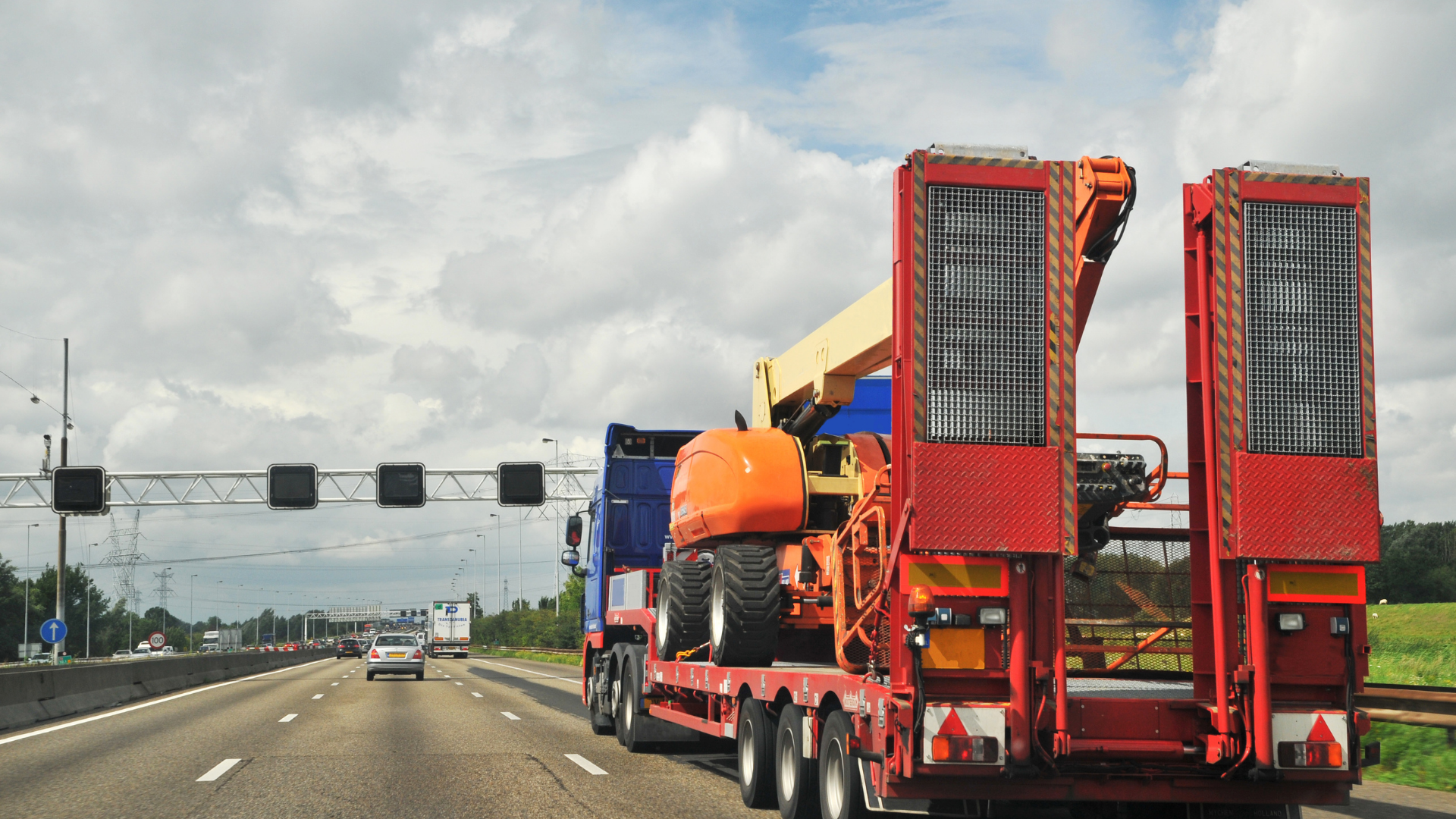
Heavy Haul & Oversized Cargo
How to Transport Heavy Haul Loads
Heavy haul loads are shipments too tall, too wide, or too heavy for a standard truck. Think of an excavator, a transformer, a press, or a wind turbine section. The moment your cargo passes the legal limit, the rules change - you now need special trailers, permits, and often escorts.
In the USA, a truck is generally capped at 80,000 lb, 8 ft 6 in wide, and about 13 ft 6 in tall before permits kick in, per the Federal Motor Carrier Safety Administration (FMCSA). In Europe, international road transport is capped at 40 tonnes and 4 metres high under EU Directive 96/53/EC. Cross either line and you are in heavy haul territory.
By the end of this page you will know exactly how heavy haul loads move: the step-by-step process, the trucks and permits involved, the weight and size limits on both sides of the Atlantic, and how our team handles the whole move for you.
Quick Facts: Heavy Haul Loads (USA & Europe)
The Process
How to Ship Heavy Haul Loads: Step by Step
Moving heavy haul loads is a planned operation, not a booking. The load, the trailer, the route, and the paperwork all have to line up before the wheels turn. Here is how the process actually works.
What counts as a heavy haul load?
Any load that exceeds the legal size or weight limit for a standard truck is a heavy haul load. It splits into two overlapping categories:
- Overweight: the cargo pushes the truck past the legal gross weight (80,000 lb in the USA, 40 tonnes in the EU).
- Oversized: the cargo is too wide, tall, or long - the domain of oversized freight shipping and oversized cargo shipping.
A single move is often both at once. A large excavator, for example, can be over height on a standard deck and over weight on the axles at the same time.
The heavy haul shipping process
Every compliant move follows the same five stages, whether it is a farm tractor across two states or a generator across a border.
Measure and weigh
Record exact weight, width, height, and length. These numbers decide everything that follows.
Trailer and route survey
Match the load to the right trailer, then survey the route for bridges, overpasses, and tight turns.
Permits and escorts
Secure oversize and overweight permits and arrange pilot cars or police escorts where required.
Load and secure
Load the machinery, balance the weight across the axles, and secure it with rated chains and blocking.
Transport and deliver
Move along the approved route within permitted hours, then offload safely at destination.
Permits and regulations
Permits for heavy haul loads are issued by the jurisdiction that owns the road, and the detail matters.
Permits are local, not universal
In the USA there is no single federal overweight permit - a load crossing five states needs a permit from each one.
- USA: each state sets its own oversize/overweight permit, routes, and escort rules.
- Europe: abnormal or exceptional loads move under national permits for indivisible cargo only.
- Timing: permits and escort bookings take lead time - last-minute moves get delayed.
Requirements vary by state, country, and route - always confirm with our team before shipping. See the EU weights and dimensions rules for the European framework.
The Practicalities
Trucks, Weight Limits, and Load Types
The right heavy haul move starts with the right equipment. The trailer, the axles, and the route all flow from the shape and weight of your cargo.
Heavy haul truck and trailer types
For heavy haul loads, the truck is only half the picture - the trailer does the heavy work. Deck height and axle count are what let a trailer carry taller or heavier loads.
| Trailer type | What makes it useful | Best for |
|---|---|---|
| Flatbed / step-deck | Simple, versatile; step-deck lowers the deck for extra height | General oversized freight, mid-height machinery |
| Lowboy (low-loader) | Very low deck for maximum load height | Tall, heavy equipment - excavators, dozers |
| RGN (removable gooseneck) | Front detaches into a ramp so machinery drives on | Self-propelled and rolling equipment |
| Extendable / multi-axle | Adjustable length and extra axles spread the weight | Very long or very heavy heavy haul loads |
Weight, width, and height limits
Heavy haul loads begin exactly where these legal lines end. Cross any one of them and your shipment needs an oversize or overweight permit.
| Dimension | USA (federal legal) | Europe (Directive 96/53/EC, international) |
|---|---|---|
| Gross weight | 80,000 lb (~36 t) | 40 t (44 t intermodal) |
| Width | 8 ft 6 in (2.59 m) | 2.55 m (2.6 m refrigerated) |
| Height | ~13 ft 6 in (states vary, no federal limit) | 4.0 m (practical standard) |
| Length (semi) | 53 ft trailer typical | 16.5 m artic / 18.75 m road train |
Road restrictions and escorts
Above the legal limits, the road itself imposes rules - not just the paperwork.
What to expect on the road
Heavy haul loads often face travel windows, escorts, and route limits that a normal truck never sees.
- Escorts: pilot cars or police escorts are required above set width, length, or weight.
- Travel times: some permits ban night moves, weekends, or rush hours.
- Route limits: low bridges, weak structures, and tunnels can force long detours.
- Notice: authorities or road operators may need advance notice for the largest moves.
Common types of heavy haul loads
Most heavy haul work falls into a handful of familiar categories, whether it is heavy equipment movement across a job site network or a one-off machinery removal.
Construction & earthmoving
Excavators, dozers, cranes, and graders.
Industrial machinery
Presses, transformers, generators, and tanks.
Agriculture & energy
Farm equipment, tractors, and wind turbine parts.
Your Partner
Ship Heavy Haul Loads With GreenLine Global
We have moved heavy haul and oversized cargo across the USA and Europe since 2008. Our team handles the permits, trailers, route surveys, and escorts so you deal with one point of contact, not a dozen agencies.
Licensed & certified
TSA and FMC licensed, EAQ certified, Estonian Chamber of Commerce member.
Customs handled
Optional customs clearance keeps cross-border machinery shipping moving.
We coordinate heavy haul loads across our own network and vetted partners, so a move that crosses states or borders still runs through one accountable team.
Where We Operate
From single machines to full project cargo, we move heavy haul loads by the safest, most cost-effective mode. Our team can walk you through the right trailer, route, and permits for your equipment.
Have a Heavy Haul Load to Move?
Send us the weight and dimensions and we will handle the trailer, permits, and route.
Your Cargo. Our Commitment. - Serving the USA and Europe since 2008.
Frequently Asked Questions
How heavy does a load have to be to count as heavy haul? +
A load becomes heavy haul the moment it exceeds the legal limit for a standard truck. In the USA that is 80,000 lb gross, 8 ft 6 in wide, or roughly 13 ft 6 in tall. In Europe the international cap is 40 tonnes, 2.55 m wide, and 4 m high. Passing any single limit - not just weight - puts you into oversized cargo shipping and permit territory.
What kind of heavy haul truck is used for oversized machinery? +
It depends on the load. Tall, heavy machinery usually rides on a lowboy or a removable gooseneck (RGN) trailer, which sit very low to keep the load under height limits. Longer or extremely heavy items use extendable or multi-axle trailers that spread the weight. Mid-height cargo often fits a step-deck. We match the trailer to your exact dimensions before we quote.
Do I need permits for oversized freight shipping across several states? +
Yes. The USA has no single federal overweight permit, so a load crossing five states needs a permit from each one, each with its own routes and escort rules. In Europe, abnormal loads move under national permits issued for indivisible cargo. We secure every permit and escort along your route as part of the service.
Should I use a heavy haul freight broker or a carrier directly? +
A heavy haul freight broker sources trailers and manages permits and escorts across a network, which is useful for complex or multi-country routes. Booking a single carrier can work for a short, simple move. As a licensed forwarder, GreenLine gives you the coordination of a broker with the accountability of a single named partner from pickup to delivery.
How do I get a quote for a heavy haul or machinery shipping move? +
Email us at sales@greenlineglobal.com or use our contact form. To quote fast, send the cargo weight, the width, height, and length, the pickup and delivery points, and whether the item can be driven or must be craned. The more exact your numbers, the tighter the price and timeline we can give you.